Corps d’Afrique
A painful evolution to prove valor
The birth of the Corps d’Afrique
In April 1862, Major General Benjamin Butler, USA, commander of the Union Department of the Gulf, approached some of the prominent free Negroes, the Creoles of New Orleans who had been in the Confederacy’s 1st Louisiana Native Guard, CSA.
Butler invited these former CSA Native Guard members to join the Union and fight against the Confederacy. These were the same men who had offered their services to the CSA, but they had been humiliated by the poor support they received and the legislature's statement that only whites could serve. Nonetheless, many still wanted to fight, partly because they wanted to demonstrate to the world that they were equals.
About ten percent of those approached by Butler agreed, which was the vast majority of eligible free men of color in New Orleans. Believe it or not, we are inching up to the formation of the Corps d’Afrique.
On August 22, 1862, General Butler issued General Order No. 63, authorizing the enrollment of black troops. Within two weeks, he enlisted 1,000 and was able to form his first regiment. Only free blacks could enroll. However, recruiters were very loose and allowed many runaway slaves to enroll.
These men formed the nucleus of what would become the Union’s 1st Louisiana Native Guard, USA. The first regiment of the 1st Louisiana Native Guard, USA, was mustered into federal service on September 27, 1862 (other sources say September 20). The regiment’s strength was 1,000. The number of runaway slaves rushing to enlist was so large that the Louisiana Native Guard, USA, had mustered four full regiments into the Union Army by November 24, 1862. Butler now had 4,000 new soldiers.
George Washington Williams, in his book A History of the Negro Troops in the War of the Rebellion, 1861-1865, wrote:
“During this brief period, three regiments of infantry and one of heavy artillery, all composed of Negroes, had volunteered and been organized and accepted by the United States. The enthusiasm of the men and the short time in which they prepared themselves for service was unprecedented.”
Williams went on to say that on the day General Butler made his appeal, the Secretary of War sent an order to Brigadier General Rufus Saxton, commander of the Department of the South (South Carolina) telling him he was “authorized to arm, uniform, equip and receive into service of the United States such numbers of Volunteers of African descent as you may deem expedient, not exceeding five thousand; and may detail officers to instruct them in military drill, discipline, and duty, and to command them.”
Part of the secretary’s motivation was to attract slaves from the plantations as a means to deplete the work force available to the Confederacy. By the end of 1862, the Union Army had “four regiments of Negroes.”
But let's not sugar-coat this endeavor. Stephen J. Ochs, writing "The Rock of New Orleans," published by The New York Times, wrote,
"The Native Guards faced daunting challenges in the face of bitter white racism. White New Orleanians insulted them in the streets, while white landlords harassed their families, and slave owners refused to allow soldiers to have contact with wives who were still slaves. In addition, the federal government failed to honor General Butler’s pledge of bounties, equal pay, and rations for soldiers’ families. White officers snubbed their black counterparts, and white enlisted men refused to salute or obey black officers and showered insults on the enlisted men of the Guards.
"Moreover, the 1st Regiment had difficulty procuring supplies and equipment, and once in the field spent most of its time on guard or fatigue duty, the latter involving back-breaking manual labor that stigmatized black troops and left little time for drill and training. To make matters worse, Gen. Nathanial P. Banks, who replaced Butler in December 1862, mounted a campaign to remove the black officers of the Native Guards, focusing his initial efforts on the 2nd and 3rd regiments."
I'll talk more about this effort to remove black officers later. It had a most negative impact.
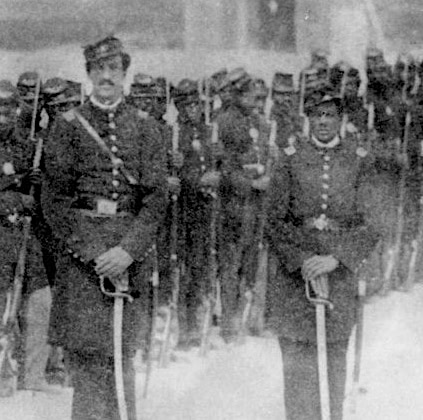
The 1st Regiment was composed of free men of color, with all black line officers (captains and below); the 2nd Regiment was composed of both free men and freed slaves, with some black and some white officers, and the 3rd was composed of freed slaves, with all black line officers.
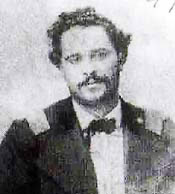
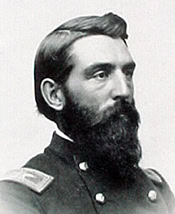
The field grade officers (majors and above) were white, with one exception: Major Francois (Francis) Ernest Dumas, shown here, of the 2nd Regiment. He was a Creole of color. He was the only "black" field grade officer in the Native Guard and only one of two in the entire Union Army.
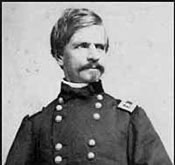
In sum, we now have Banks in charge of New Orleans and all Union forces in the Gulf region. Like so many others, this was a political appointment. Banks was no military man, but instead a politician with considerable influence. Banks had been Speaker of the United States House of Representatives and Governor of Massachusetts in the 1850s. He had considerable political clout and no military experience.
Lincoln understood Banks' political influence and asked Banks to raise a force of 30,000 recruits. He did it. He also hoped Banks could persuade the seceded states back into the Union.
In November 1862, Lt. General Henry Wager Halleck was the General-in-Chief of the Union armies. He told Banks that President Lincoln “regards the opening of the Mississippi River as the first and most important of all our military and naval operations, and it is hoped that you will not lose a moment in accomplishing it.”
On December 17, 1862, General Banks replaced Butler and took command of the Department of the Gulf. He already commanded the Army of the Gulf, so he wore two hats. The Army of the Gulf at this time had only one corps, XIX Corps, and Banks wore a third hat by commanding it as well.
Like so many others, this was a political appointment. Banks was no military man.
Banks, like General Butler, is a tough nut to understand. He very much favored bringing many blacks into the Union Army. Yet he did not favor black officers in his army at all.
General Banks decided he needed to redeploy his forces to bolster the defense of New Orleans because of concerns that the Confederates might stage an attack on the city.
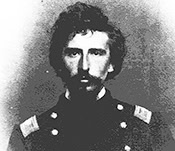
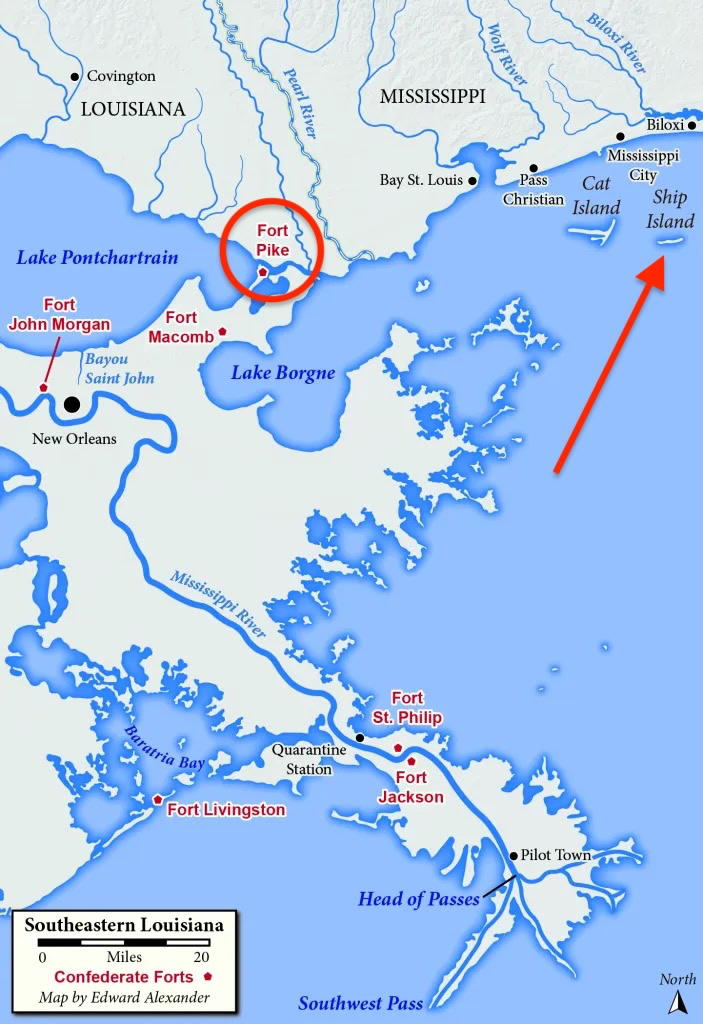
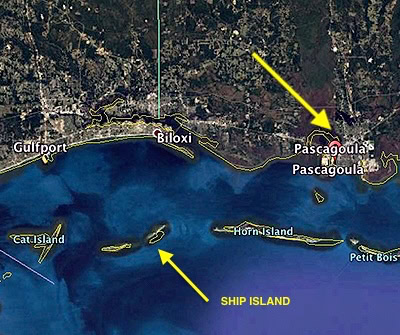
He deployed seven companies of the 2nd Regiment of the Native Guard to Ship Island to help defend the entry to the Mississippi River, Colonel Nathan Daniels, USA, in command. He and his Native Guard force arrived on January 12, 1863. Three other companies of the 2nd Native Guard were sent to Ft Pike to guard the eastern water approach to New Orleans. Daniels was not excited about the duty, but understood it was vital to hold the island.
Colonel Daniels had recommended Dumas for promotion to major. General Butler agreed, impressed that he looked as white as black and awed by his wealth as a plantation owner.
The island was occupied by the 13th Maine Regiment of US Volunteers, Colonel Henry Rust, in command. Rust may have been from Maine, but he would write with certainty in his diary that he had little to no use for the blacks in the Union Army. He wrote:
"‘Nigger on the brain.’ No, I have not got that. It has stuck to my stomach and gone all over me. The feeling of certainty that I have got to leave my two good companies here to come into collision with these niggers has made me feel homesick, and I have serious thoughts of resigning.”
Rust told Daniels to keep the Native Guard troops away from the 13th Maine. Rust and all but one detachment of his men left the island on January 20, 1863. Once Rust was gone, Daniels integrated the units so they would drill and work together, in some cases requiring Maine lieutenants to be subordinate to Native Guard captains.
After a short time, the Maine officers refused to obey orders from black officers, and their enlisted men followed. Daniels arrested them and confined them to quarters with Native Guard sentries. There were some forces from the 8th Vermont present as well, but they did not cause such trouble as they were guarding Confederate prisoners and patrolling the post, therefore not exposed to the Native Guard. Both the Maine detachment and the 8th Vermont departed. Daniels' next problems would come when ships with white crews landed at the island.
Initially, the 2nd Regiment force was relegated to monotonous duties. However, on April 8, 1863, a steamer arrived at Ship Island and uploaded two companies, Bravo and Charlie, along with a 12-pounder boat howitzer, Colonel Daniels in command. This steamer left on April 9, rendezvoused with another, and anchored offshore East Pascagoula, Mississippi, shown on the mainland on the map. The two companies of Native Guard landed and took possession of the village.
The Confederates were surprised when the Native Guard landed, but soon attacked, attempting to drive the Native Guard into the sea. The Native Guard, led by Major Dumas, more than held its own and drove the Confederates back. Word then came that Confederate reinforcements were on their way, so Colonel Daniels recalled his men, and they evacuated, returning to Ship Island.
Daniels reported this "skirmish" on April 9, 1863, to his headquarters,
"I have the honor to report that I embarked with a detachment of 180 men of my regiment on U.S. transport and yesterday at 9 a.m. attacked Pascagoula, Miss. Landed my force, took possession of the place, and hoisted the American colors upon the hotel. I immediately thereafter was attacked by the Confederate cavalry, some 300 strong, and one company of infantry. Repulsed them after a severe fight, killing 20 or more, and wounding a large number, capturing 3 prisoners and the Confederate colors. Held the town until 2 p.m., frequent skirmishes occurring meanwhile, when I withdrew my forces to the boat, learning that large re-enforcements had arrived from the camp up the Pascagoula River. Loss in battle, 2 killed and 5 slightly wounded."
Native Guard soldiers were the ones who hoisted that flag upon the hotel.
The 2nd Regiment, Louisiana Native Guard was the first black unit on the Gulf Frontier during the Civil War to meet Confederates in battle and suffer and inflict casualties.
According to Daniels, Major Dumas fought with great courage. Daniels summed up how hard his men fought with this entry:
"One of the (black) privates … had both legs blown off by a shell … so that his bowels hung from the gaping hole … and the remnants of his poor mutilated body was being borne by me upon a stretcher when, he raised up on his elbow, gave the military salute and exclaimed, 'don't give up Colonel, we can whip the rebels yet. God bless you, Colonel — Fight them to the death.' … He died soon thereafter."
Shirley Elizabeth Thompson, writing Exiles at Home: The Struggle to Become an American in Creole New Orleans, wrote,
"Dumas and other officers earned special commendation as officers who were constantly in the thickest of the fight, and by their unflinching bravery and admirable handling of their commands … select great honor upon the flag under and for which the so nobly struggled."
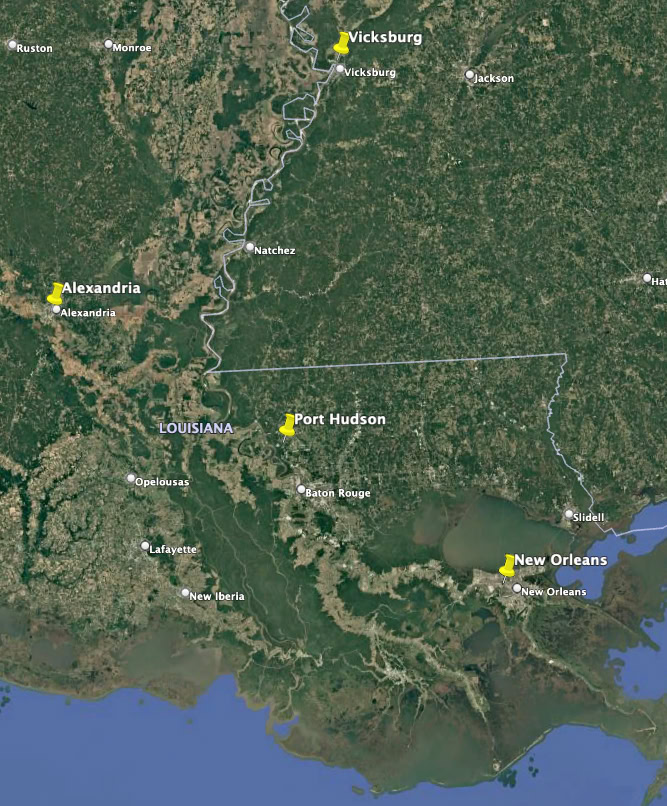
Pascagoula, Mississippi, was northeast of Ship Island. The next target to capture was Port Hudson, upstream of Baton Rouge and northwest of New Orleans. The Union held Memphis and New Orleans. The requirement was to win the middle Mississippi River by taking Vicksburg.
General Banks was told to drive up the Mississippi to marry up with General Ulysses S. Grant for the assault on Vicksburg. To do that, Banks would first have to take Port Hudson.
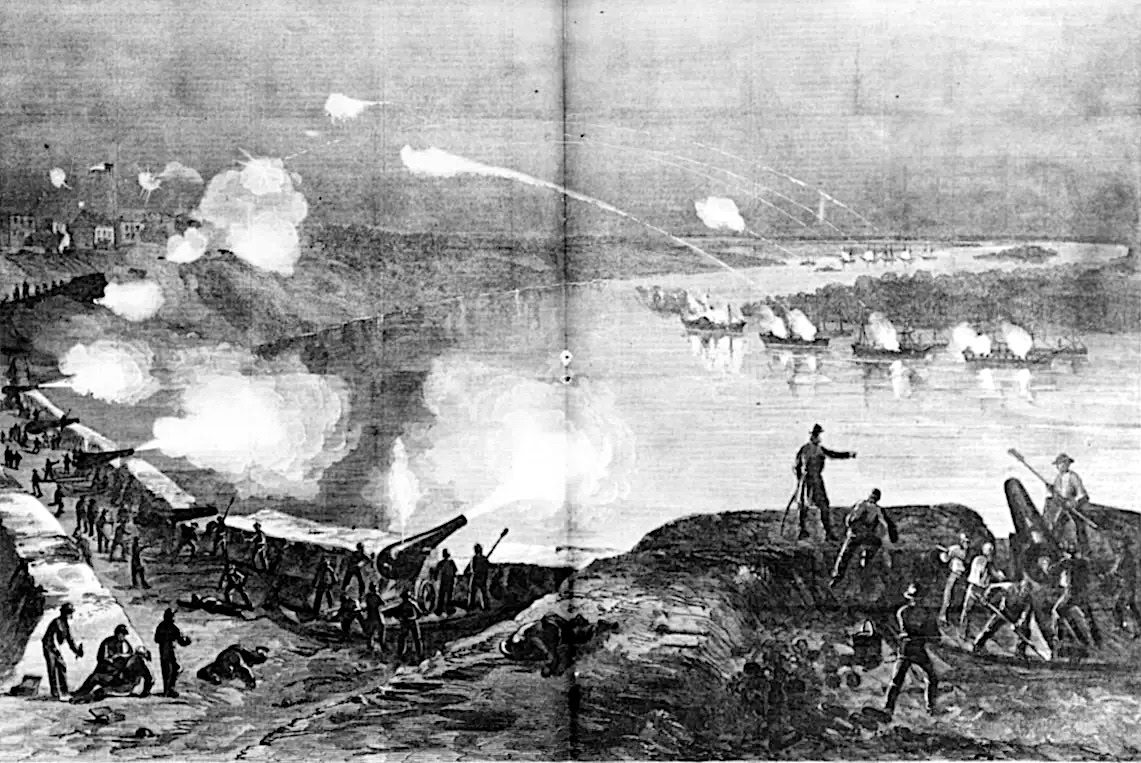
Port Hudson was located on an 80-foot bluff on the east bank of the Mississippi River. The terrain was extremely rough, a maze of deep, thickly forested ravines, swamps, and cane brakes, giving the effect of a natural fortress. According to historian John D. Winters, "Port Hudson, unlike Baton Rouge, was one of the strongest points on the river, and batteries placed upon the bluffs could command the entire river front."
It was a high priority on Banks’ plate. Banks, however, was burdened by the idea of persuading the people of Louisiana and New Orleans to reject their secession. He had no chance of success as the people there resented the Union armies. As a result, Banks was reluctant to move against Port Hudson.
Admiral Farragut was furious that Banks was not moving toward Port Hudson. He was adamant that the move must be made, with or without ground forces. So, he went against Port Hudson without ground forces. The attack began on March 16, 1863. Farragut employed four principal warships and three gunboats.
The Confederates were well prepared, Farragut’s fleet was battered when attempting to run the enemy batteries, and Banks’ ground force failed to get into position. Banks withdrew his 17,000 troops to Baton Rouge while Farragut was at battle. Farragut’s flagship and one other ship were all that got by Port Hudson in one piece.
Farragut anchored about 12 miles below Vicksburg on March 19. General Banks, instead of going against Port Hudson, took control of Alexandria on the Red River northwest of Port Hudson. Farragut then moved to positions between the mouth of the Red River and Port Hudson through the end of April 1863.
By early May, General Banks decided that he would now move against Port Hudson, in part because he was told that General Grant would send him reinforcements. Before attacking Port Hudson, however, he proposed the formation of the Corps d’Afrique through General Order No. 40, May 1, 1863.
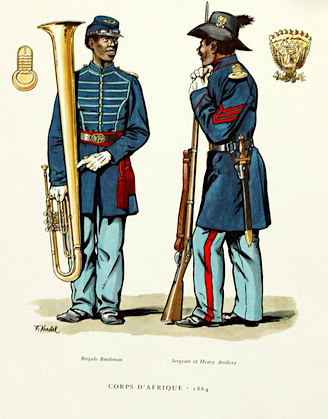
“The Major-General commanding the Department (General Banks) proposes the organization of a Corps d'Armée of colored troops, to be designated as the 'Corps d'Afrique.' It will consist ultimately of eighteen regiments, representing all arms -- infantry, artillery, cavalry -- making nine brigades of two regiments each, and three divisions of three brigades each, with appropriate corps of engineers, and flying hospitals for each division. Appropriate uniforms, and the graduation of pay to correspond with the value of services, will be hereafter awarded."
The War Department did not recognize it as an official army corps, but instead assigned those men to General Ullman’s command. The Corps d’Afrique became known to many as “Ullman’s Brigade.”
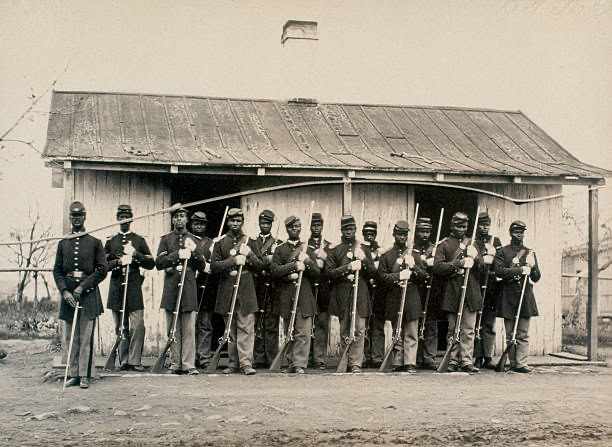
In June 1863, the three Native Guard regiments were redesignated the 1st, 2nd, and 3rd Corps d’Afrique.
The Corps d’Afrique was effectively formed out of the organization of the Louisiana Native Guard that had sided with the Union. The Louisiana Native Guard had formed the First, Second, and Third Louisiana Guard and would become the First, Second, and Third Infantry Corps d’Afrique.
Click to zoom graphic-photo