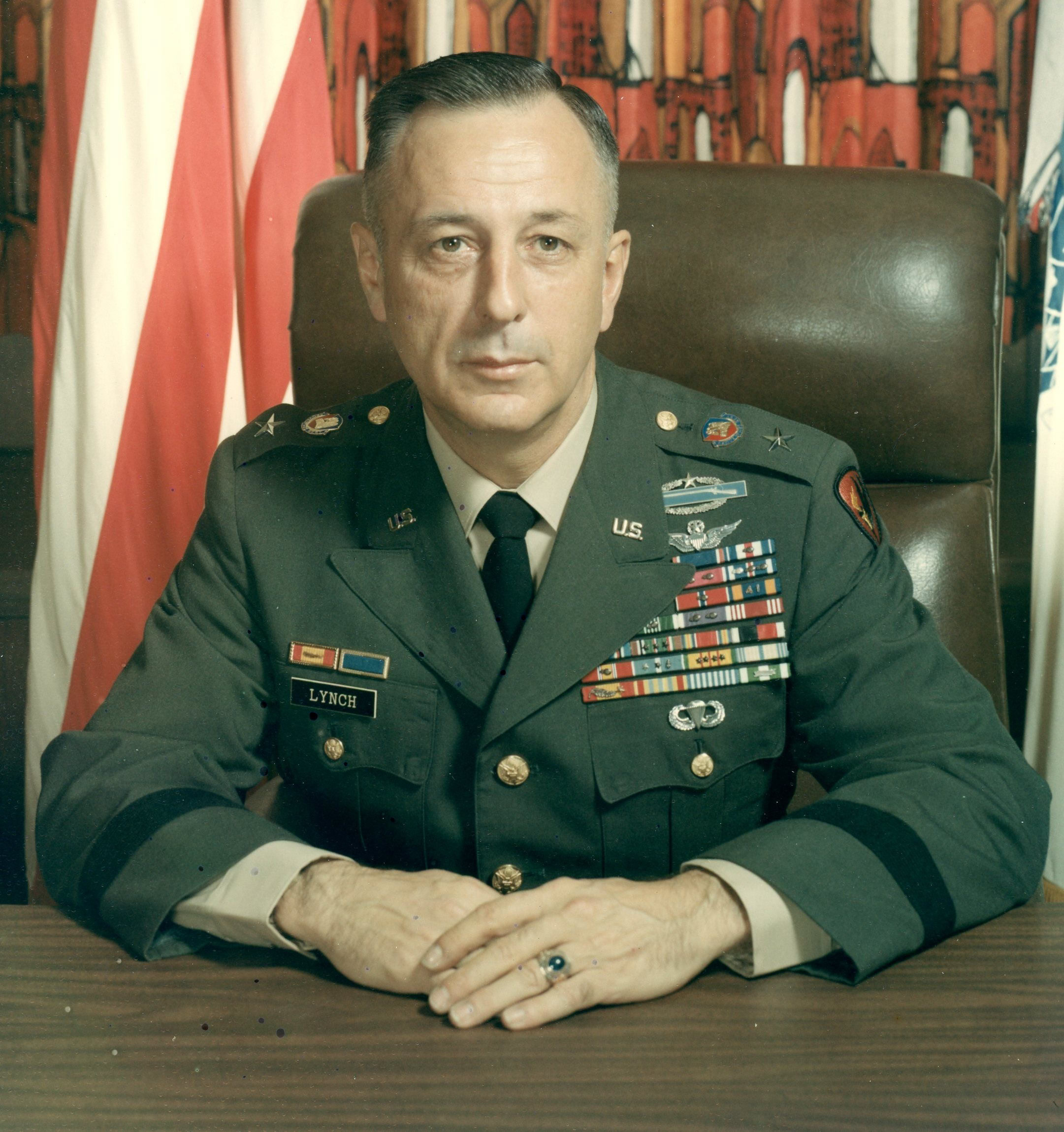
The generals’ pilot, Capt. Lynch
“Hold on General. We’ve got to go in!”
General Ridgeway takes command
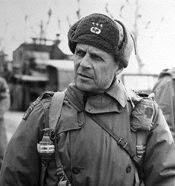
Lieutenant General Matthew Ridgeway, USA, replaced General Walker, and Captain Lynch would be his pilot, too.
General Ridgeway graduated from West Point in 1917 and was commissioned as a second lieutenant in the infantry. He served in Panama and the General Staff, commanded the 82nd Airborne Division in Sicily, Italy, and France, and the XVIII Airborne Corps in Germany. After assignments in Europe, he served as the US representative to the UN Military Staff Committee and chaired the Inter-American Defense Board. Toland describes him as a man of determination, speaking “quietly, making every word count.”
General Ridgeway arrived in Tokyo on Christmas Eve, 1950. The Chinese had crossed the Yalu and were advancing into the ROK. MacArthur warned him that the Chinese posed a threat and gave him free rein to do what he thought was best. He reached Taegu on Christmas Day. He then went to the EUSA Headquarters in Seoul and saw a “mood of depression” that worried him. Allied forces appeared to be in control, but then had to withdraw southward.
Ridgeway wanted to go on the offensive but first had to restore the EUSA’s fighting spirit. He immediately went out to visit the troops. US and ROKA forces were located in a defensive line near the 38th parallel.
Not only did he have to boost morale and confidence, but he also felt MacArthur needed to be controlled. He learned that the JCS in Washington was losing its enthusiasm for war; he would not receive reinforcements, and Korea was considered expendable—so much so that leaving Korea entirely became an option. On December 31, the Chinese and North Koreans launched a massive offensive.
Ridgeway retained Capt. Lynch as his pilot. He planned to inflict “maximum punishment” and delay actions on the enemy. On January 1, he and Lynch flew “dangerously low” to observe his troops. He decided to direct a general withdrawal to form a perimeter around Seoul. On January 3, he ordered a controlled withdrawal from Seoul.
The Chinese decided to take a breather. On January 15, 1951, Ridgeway launched a limited counterattack in the west, followed by another offensive in the same region on January 25. Ridgeway took to the air with Lynch for low-level reconnaissance over the battlefront, which boosted his confidence that the EUSA could manage the situation. His forces had reached Suwon, south of Seoul.
By February 8, Ridgeway was informed that the Chinese were pulling back. He commanded another counterattack, which produced mixed results. As a result, Ridgeway ordered another offensive aimed at retaking the 38th parallel and capturing Chunchon. It began on March 7.
Elements of the 25th ID crossed the Han River heading north. Ridgeway had been monitoring the crossings from the ground and asked Lynch to take him up to observe the operation. Lynch then landed on a dry gravel floodplain of the river, and Ridgeway walked among those in the 25th ID who were leading the charge.
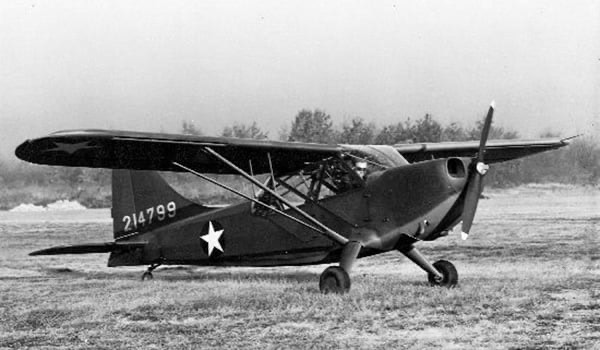
On March 19, Ridgeway was surprised to learn that his forces faced no resistance as they advanced toward Chunchon, about 45 miles northeast of Seoul. He and Lynch took off in an L-17, with two aides following in a second plane. Ridgeway asked Lynch if he could reach Chunchon, and Lynch replied Yes. The aides in the second plane warned them not to attempt it because his forces had not yet secured the town.
The plan had been to conduct an airdrop along with an armored assault. But if they were unopposed on the ground, Lynch said they could call off the airdrop. They circled a few times and saw elements of the 1st Cav about 10 miles outside the city. They kept reducing altitude until Lynch could look into the houses—no Chinese.
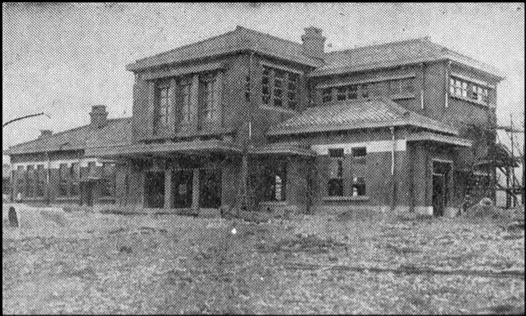
Ridgeway wanted to land in the town, so Lynch then flew “low under some wires, climbing slightly to clear a stone bridge, and then dropping down on a small dirt road leading to the railroad station.” Ridgeway’s aide, in the second plane, proclaimed, “You’re out of your mind.”
Lynch made a harrowing landing in front of the railroad station with no one around. He handed Ridgeway a carbine, then grabbed his own and ran toward a building after telling Ridgeway to cover him. Civilian Koreans emerged from buildings, but no Chinese appeared. Soon, a small group from the 1st Cav arrived, and within moments Brigadier General Charles Palmer, the 1st Cavalry commander, stepped out of a tank. Ridgeway told him to press on.
Lynch had to tell the 1st Cav troops to clear the road so he could take off. He lifted off, heading down a hill, and with the wind at his back, it wasn't the best way to get airborne. Ridgeway called off the airdrop.
MacArthur authorized Ridgeway to cross the 38th parallel on March 23. The next move involved an airdrop of the 187th Airborne Infantry Regiment. Lynch and Ridgeway took off from a small airstrip at Yoju, where the general’s headquarters were located. They flew north to Seoul and spotted two US tanks that had hit mines, which had stopped the column from moving. Lynch flew down to treetop level. Ridgeway could see that the troops would work their way out, so he told Lynch to fly toward Munsan, 25 miles behind enemy lines and 25 miles northwest of Seoul.
As the airborne forces parachuted in, Ridgeway told Lynch to get lower so the general could watch them. Then the general wanted to land. Lynch found a road he could use for landing, but the paratroopers were everywhere. Ridgeway yelled at them to get out of the way so they could land, but to no avail.
Lynch was now flying below 100 ft. Suddenly, he saw airborne troops parachuting in from above, and Lynch was forced to land. He shouted, “Hold on, general. We’ve got to go in!” Incredibly, he found a dike and landed with his heart pounding.
They then drew hostile fire, so Ridgeway climbed onto the dike and looked into a culvert. There were some exchanges of fire, and the general soon moved among his troops.
Meanwhile, Lynch was trying to turn his aircraft around by hand on the dike so he could take off. He yelled to some troops for help, but they came under small-arms fire. Lynch was worried that his general was out in the middle of all the chaos and spotted a machine gun that needed to be taken out. Lynch told the soldiers, “My Old Man is down there and he’ll get teed off as hell if I’m not ready to go. We’ve got to go up and take out that machine gun.” He assembled three squads, and they took out the machine gun.
Ridgeway and Lynch climbed aboard the plane, mortar shells flew towards them, and Lynch stepped on the gas, raced down the dike, and took off into the air.
As the war ended, Lynch made these comments about his view of the war,
“In the process, we made the worst mistake in warfare. We began by underestimating enemy capabilities and overestimating our own. Ironically, by the time we got around to cease-fire negotiations, these same people overestimated the enemy’s capabilities and underestimated ours, thus forcing us to accept compromises that were not necessary.”
When first introducing Eugene Michael Lynch, I noted he received the Distinguished Service Cross, the second-highest medal, for service in Vietnam as commander of the 2nd Brigade, 25th ID. His flying style had not changed.
Four companies of American infantry came under heavy attack by North Vietnamese troops. Helicopter gunships provided support but had to depart the area to refuel and rearm.
Colonel Lynch was flying a command and control helicopter and saw that the enemy would gain superiority over the infantry on the ground, so he made a series of low-altitude firing passes. He received heavy ground fire, but he continued, and his door gunners inflicted heavy losses on the enemy. This action enabled the beleaguered Americans to assault the enemy positions.
Lynch continued his low-level passes, directing fire on the enemy. Over a period of 28 consecutive hours, he directed the ground and air forces involved sufficiently to defeat the enemy force.
Brigadier General Lynch passed away on September 5, 2003. He was buried in Arlington National Cemetery with full military honors.
Click to zoom graphic-photo

Ed Marek, editor

Marek Enterprise
224 N Barstow St Suite 426
Eau Claire, WI 54703
© Copyright 2025